A Safe Routine for Reusing Flower Buckets
@gardenguide63
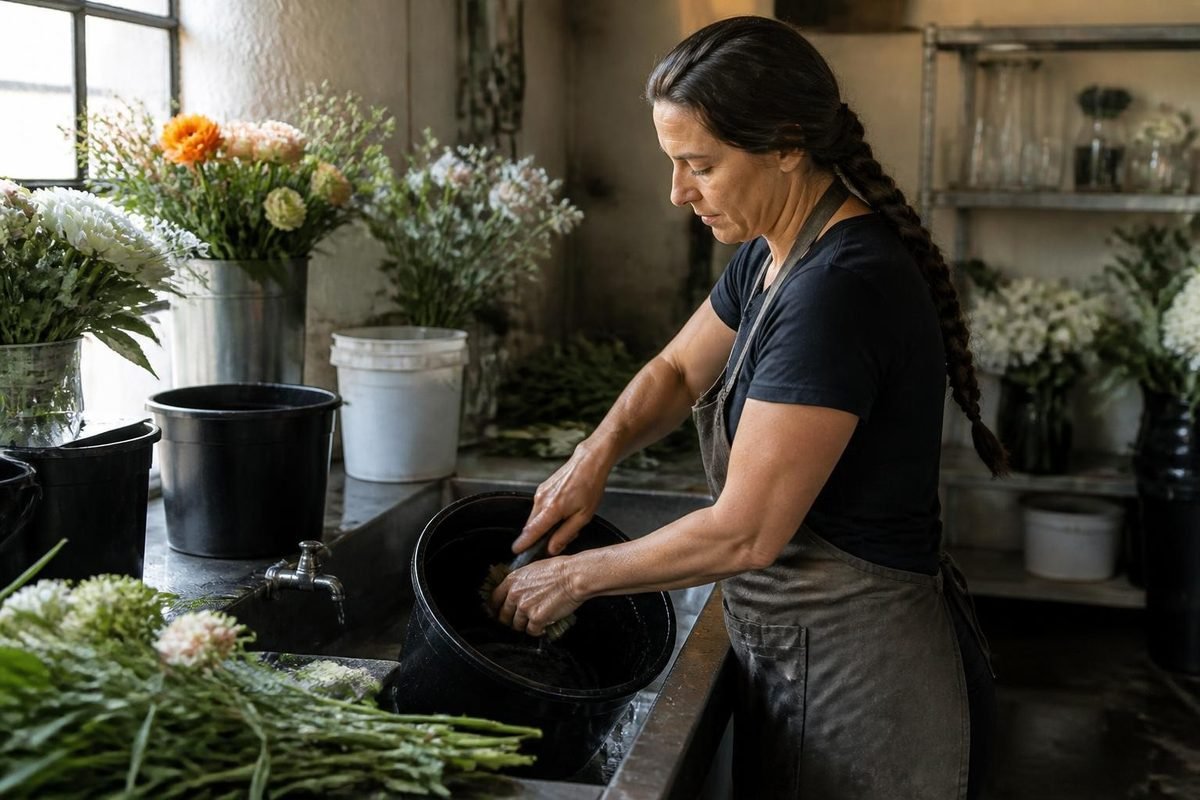
Flower buckets can be used again if they are emptied, washed and disinfected between deliveries, then dried before they are put away. Before filling one, inspect it for damage or dirt that may remain after cleaning.
Clean each bucket between deliveries
Do not leave old water sitting in a bucket after flowers have been unpacked. Empty it promptly, and remove leaves, pieces of stem and other visible plant matter. Keep buckets that still need cleaning apart from the clean ones, so they are not accidentally used during a busy shift.
Wash all the areas that came into contact with the flowers or water. That includes the inside bottom, the sides and the rim. The outside and handle need attention too if they became dirty during transport. While scrubbing, check for a slick film or other residue by touch; a bucket can appear clean while a layer remains on its surface.
Clean the bucket before disinfecting it. Disinfectant is most effective when applied to a surface that has already had dirt and debris removed. Choose a product that is suitable for the bucket material, and follow its label for dilution, the time the surface must remain wet and whether a final rinse is required. Use the protective equipment specified on the label, and do not combine cleaning chemicals.
Steps to prepare a bucket for reuse
- Empty and check it. Pour away the used water and remove plant scraps. Look for cracks, deep scratches and residue that is difficult to remove.
- Scrub with detergent. Wash the inside and rim using water and detergent. Clean the outside and handle as well, particularly if they picked up dirt while being moved.
- Rinse off the wash. Use clean water to remove detergent and loosened debris before moving on to disinfecting.
- Disinfect as directed. Apply a product approved for the bucket material. Keep the required surfaces wet for the full contact time stated on the label, and rinse afterward if instructed.
- Dry and put away. Leave the bucket to dry in a clean place. Store it separately from dirty buckets, waste and containers of chemicals until it is needed.
- Check before filling. Make sure the bucket is clean and has no chemical residue. Use fresh water and add flower food according to its directions.
Set aside any bucket that cannot be cleaned thoroughly. Deep scratches and cracks can make proper cleaning difficult, while a damaged handle can make a full bucket unsafe to carry. Keep flower buckets for flowers; do not use them to hold pesticides, fuel or other chemicals.
Common questions about bucket reuse
Is it fine to add fresh water to the old water?
No. Empty the bucket and clean it before filling it again. Adding water on top leaves the original water and debris in place.
Will a quick rinse do the job?
No. Rinsing helps remove loose material, but it does not take the place of washing and disinfecting. Scrub the bucket first, then use disinfectant according to its label.
May one brush be used for all the buckets?
Yes, as long as the brush is kept clean and in good condition. Replace it if it is damaged or cannot be cleaned properly.
What should I do with a bucket that held chemicals?
Do not use it for flowers. Follow the chemical label and workplace procedures for handling the container, and choose a different bucket for floral use.
Continue with https://greensys2019.org/post-harvest-care-why-the-first-hours-decide-a-flowers-vase/